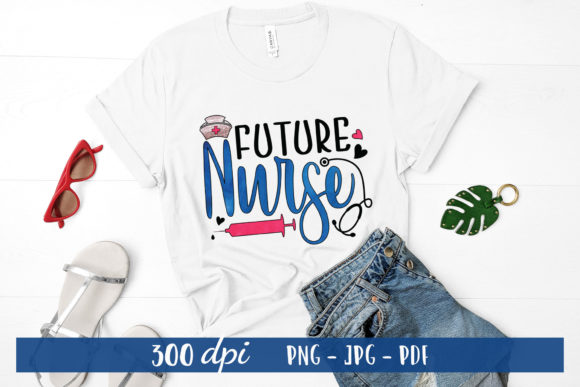
Future Nurse PNG: A Design Review for Embroidery Projects
When a design lands on my screen, I immediately start imagining it on fabric. The Future Nurse PNG file, with its promise of high resolution and a transparent background, presents a compelling theme. But for embroidery, especially for small businesses and crafters, the digital graphic is only the starting point. The real test is how it translates into thread and stitch on a real product.
First Impressions and the Emotional Hook
This design carries a specific, powerful mood. It’s celebratory, aspirational, and deeply personal. The visual personality leans toward a clean, hopeful graphic style, ideal for gifts and recognition items. For embroidery, this theme immediately suggests projects meant to honor someone’s journey into nursing or to inspire a future healthcare professional.
The layout and detail level, as seen in the PNG, appear geared toward clarity. This is a significant advantage for embroidery work. Overly intricate graphics can become muddy when stitched, but a design with clear shapes and intentional line work, like this one, typically translates well into satin stitch outlines and fill stitch areas. My first thought was how naturally it would belong on a custom embroidered sweatshirt or a tote bag for a nursing student—a product with both personal meaning and everyday utility.
Real-Life Embroidery Scenario: The Boutique Gift Tote
Let’s walk through a common scenario. A client requests a personalized gift for their daughter who just got accepted into a nursing program. They want a high-quality, handmade product—something more special than a generic store item. You decide on a sturdy canvas tote bag, a practical item she can use for books or supplies.
Using the Future Nurse PNG as your embroidery file guide, you begin planning. The 12x12 inch size gives you ample room to scale the design appropriately for the bag’s panel. The transparent background means you can easily place it in your software without cleaning up edges. But here’s the practical judgment: you’d likely resize it to a more modest, impactful size for the tote, perhaps 8x8 inches or smaller, to ensure the embroidery doesn’t become overly dense and stiffen the fabric. On a dark-colored bag, you’d plan your thread colors for high contrast, possibly using bright whites and clean blues to make the design pop.
Performance Across Common Embroidery Projects
This design’s strength is its versatility across product types, but each application requires a slightly different approach.
For custom apparel like t-shirts and sweatshirts, the design’s theme adds significant value, transforming a basic garment into a meaningful keepsake. However, on stretchy fabrics like t-shirts, careful stabilizer choice is critical to prevent puckering around any dense fill stitch areas the design might contain. On a baby’s romper for a “future nurse” photo gift, you’d scale it down dramatically and likely simplify any extremely tiny details for stitching clarity.
As an embroidered patch, it would be excellent. Patches allow for higher stitch density, and this graphic’s style would result in a clean, professional-looking badge. For kitchen towels, aprons, or pillow covers aimed at the nursing community, it becomes a decorative statement piece. The key in all these cases is matching the design’s scale to the item’s size and function.
Where to Exercise Caution
Not every project is an ideal fit. On curved surfaces like caps, the design’s potentially wide layout (based on the 12x12 spec) might need significant adjustment to fit the cap’s front panel without distortion. Embroidering on thin fabrics, like lightweight tees, requires checking the stitch density in your digitized file—areas with heavy fill stitches could show through or weaken the fabric.
Always test the design on scrap fabric first. Use the same material and color as your final project. This test reveals everything: how small lettering (if present) stitches out, whether thread colors have the intended contrast, and how the overall design feels after stitching. I also recommend checking it in black and white mockups to gauge its form without color influence.
The Impact on Your Business and Your Customer
Using a well-executed design like this affects more than just the stitchout. It influences customer trust and engagement. A clean, professional embroidery result on a tote bag or sweatshirt reinforces the quality of your craft business. It makes the personalized gift feel premium, increasing its giftability and the recipient’s recognition of the care put into it.
For Etsy sellers or small shop owners, it provides a cohesive design asset for a niche market—products for nurses, medical students, and their families. It helps build brand consistency if you offer a line of healthcare-themed items. The visual appeal, when embroidered neatly, directly supports buyer satisfaction and can lead to repeat business or referrals within that community.
Practical Designer Notes Before You Hoop
Before running this machine embroidery design for a client order or craft fair product, a few steps are non-negotiable.
- Confirm the actual hoop size needed for your scaled version. Don’t assume the 12x12 file size is your hoop size.
- Inspect the provided file formats—PNG, JPG, PDF—as guides for digitizing. They are not direct embroidery files. You must digitize them into a stitch file (PES, DST, etc.) compatible with your machine.
- Review stitch density in your digitized version. High density can be tough on fabrics and machines.
- Plan your thread colors considering both light and dark fabric backgrounds. Some elements may need different color choices for each.
- Use proper stabilizer for your chosen fabric type. This is paramount for a clean finish.
- Crucially, check the licensing included with this download. The note says “This download does not incl…”—you must clarify what it does not include. Confirm whether you can use it for commercial embroidery projects and sell the finished products. Never assume.
Ultimately, the Future Nurse PNG graphic is a strong starting point for a range of heartfelt embroidery projects. Its theme is its greatest asset, and its clean presentation suggests it can be translated into thread effectively. By approaching it with the practical steps above—testing, scaling, and verifying licensing—you can turn this digital design into a beautiful, durable embroidered product that carries real meaning for your customers and success for your craft.